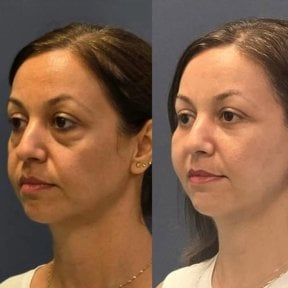
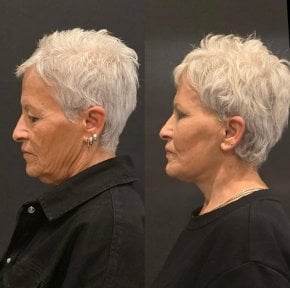
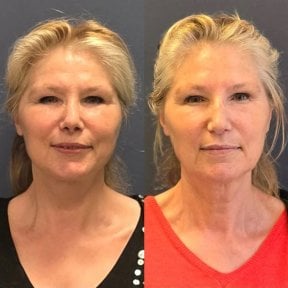
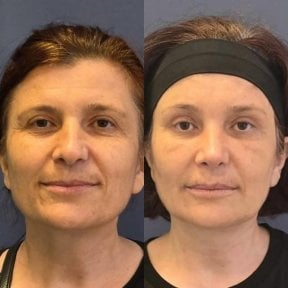
Le lipofilling en Turquie coûte généralement entre $1,400 et $4,000. Le tarif final dépend du nombre de zones traitées, de la technique d'extraction et de la clinique. En France, ces interventions coûtent environ $5,500. Les patients réalisent une économie d'environ 51% par rapport aux prix français. Les forfaits turcs incluent les bilans préopératoires, les consultations, les transferts et souvent un hébergement en hôtel 4 ou 5 étoiles.
Avis d'expert Bookimed : Choisir une clinique avec des spécialistes certifiés offre souvent une meilleure valeur que de viser le prix le plus bas. Par exemple, la professeure associée Dr Esra Ozbasli propose des forfaits de lipofilling génital premium à environ 2 400 €. Ce tarif comprend un hôtel 5 étoiles et des transferts VIP. Des cliniques renommées, comme le Quartz Hospital ou l'Istanbul Aesthetic Plastic Surgery Center, utilisent la technologie VASER. Cette méthode garantit des cellules graisseuses de qualité pour un meilleur taux de survie après le transfert.
| Turquie | Pologne | République tchèque | |
| Lipofilling | de $1,424 | de $3,000 | de $2,800 |
Le Dr Yaman réalise 500 à 600 interventions par an, se spécialisant dans les résultats d'aspect naturel pour le lipofilling et le remodelage corporel à l'hôpital Lokman Hekim d'Istanbul.
Le Dr Aydinol est spécialisé dans la combinaison du transfert de graisse autologue et des implants pour une augmentation mammaire au rendu naturel, s'appuyant sur des recherches approfondies et des adhésions à des sociétés internationales.
Spécialisé en lipofilling à l'hôpital Memorial Şişli, le Dr Uzunoglu apporte son expertise issue d'une formation prestigieuse et d'années d'expérience pratique.
Op. Dr. Yunus Emre Şeker is a plastic, reconstructive and aesthetic surgeon in Antalya. He graduated from Ankara University Faculty of Medicine. He completed his residency at Akdeniz University Hospital. He trained under Prof. Ömer Özkan. He was an active team member in uterus and double-arm transplant surgeries.
In 2023, he won second place (Clinical Branch) in the Turkish Society of Plastic, Reconstructive and Aesthetic Surgery Research Competition. He taught plastic surgery at Adıyaman Training and Research Hospital from 2023 to 2025. He has spoken at national congresses and contributed to publications.
Clinical focus: rhinoplasty (ultrasonic, ethnic), facial rejuvenation, breast aesthetics, body contouring, reconstructive surgery.
Lipofilling in Turkey is highly safe when performed by surgeons board-certified by the International Society of Aesthetic Plastic Surgery (ISAPS). Success relies on sterile fat harvesting and purified reinjection techniques. Leading Istanbul clinics maintain safety through JCI accreditation and specialized closed-air systems to prevent contamination.
Bookimed Expert Insight: Data shows a clear safety divide between multi-specialty JCI hospitals and high-volume aesthetic conveyor clinics. While boutique clinics offer lower prices, JCI-accredited facilities move 10,000+ patients yearly with lower complication rates. Choosing a surgeon who is a certified VASER trainer often ensures more precise fat harvesting and smoother recovery.
Patient Consensus: Most patients report smooth recoveries but emphasize that fat survival typically ranges from 50% to 70%. Many advise choosing ISAPS-certified surgeons to avoid common issues like clumping or irregular fat absorption.
Lipofilling results in Turkey are considered long-term, as 30% to 70% of the transferred fat typically establishes a permanent blood supply. While initial volume stabilizes after 3 to 6 months, the surviving fat cells remain indefinitely, behaving like natural tissue during future weight fluctuations.
Bookimed Expert Insight: Data from top Istanbul clinics shows that surgeons using VASER liposuction for fat harvesting, like Dr. Leyla Arvas at Quartz Hospital, achieve higher retention. This gentle technology preserves cell viability better than traditional methods. For the most durable results, choose a specialist who prioritizes micro-fat or nano-fat techniques over high-volume injections.
Patient Consensus: Many patients notice a significant volume drop during the first 3 months but are satisfied with the natural, soft contour that remains. They emphasize that keeping a stable weight is the most critical factor for preserving their new shape long-term.
Recovery from fat grafting typically requires 1 to 2 weeks for initial healing, though visible swelling often persists for 3 to 6 weeks. While patients return to desk work within 14 days, final results stabilize only after 3 to 12 months once transferred cells establish a permanent blood supply.
Bookimed Expert Insight: While clinics often quote a 14-day recovery, our data shows that 5-star packages, like those from Assoc. Prof. Dr. Esra Özbaşlı, include 5-star hotel stays to manage the critical first 48 hours. This extra comfort is vital because peak swelling and bruising actually hit their maximum intensity on day 3, not day 1.
Patient Consensus: Patients emphasize that while you can return to normal life quickly, you must wear compression garments for 4–6 weeks to ensure the fat stays in place. Many note that results look overfilled initially, as 30–50% of the transferred volume naturally resorbs within the first few months.
Focus your consultation on the surgeon personal fat survival rates, board certifications, and harvesting techniques like VASER or manual liposuction. Confirm the total costs for fat processing and anesthesia. Ask for a specific 6-month recovery timeline and a written revision policy for post-op touch-ups.
Bookimed Expert Insight: Patient data shows that specialized clinics in Nişantaşı often provide higher-touch post-op support than high-volume hospitals. While large facilities like Hisar Hospital Intercontinental serve 250,000+ patients, smaller practices often allow for direct mobile contact with the surgeon. This access is vital for remote recovery once you return home.
Patient Consensus: Many patients suggest testing a clinic responsiveness with detailed follow-up questions before booking. They emphasize that a surgeon who seems rushed or dismissive during the initial consultation often provides less support during the critical 6-month healing phase.
Turkey is a global leader for medical treatments, with hair transplantation, dental care, and cosmetic surgery serving as the primary pillars. Specialized hubs in Istanbul and Antalya offer advanced procedures including rhinoplasty, liposuction, and lipofilling, alongside complex oncology and robotic-assisted surgeries.
Bookimed Expert Insight: While Istanbul is the primary hub, clinics in Izmir and Antalya are increasingly popular for combining surgery with coastal recovery. Data shows surgeons like Dr. Leyla Arvas at Quartz Hospital function as certified VASER trainers, indicating that Turkey doesn't just perform these procedures but actually sets the global training standards for advanced body contouring technologies.
Patient Consensus: Many patients choose Turkey for the all-inclusive experience, frequently praising the seamless VIP transfers and 5-star hotel stays. While most report high satisfaction, experienced patients emphasize that fat grafting often requires 2 sessions due to 30–70% natural resorption.
Fat grafting in Turkey is safe when performed in JCI-accredited facilities. The surgeon must be a board-certified plastic surgeon. Highly experienced specialists use techniques like the Cihantimur Fat Transfer System. This helps boost fat cell survival. Safety is bolstered by strict ISO quality standards and the use of autologous fat. This eliminates rejection risks.
Bookimed Expert Insight: Safety in fat grafting is linked to harvesting pressure rather than just surgeon fame. Data shows clinics using low-pressure harvesting and small fragment sizes (0.5–1mm). They get better long-term volume. Dr. Bulent Cihantimur developed a proprietary closed system. It is specifically designed to boost fat survival rates across Turkey.
Patient Consensus: Patients in Turkey highlight the importance of allowing 6–9 months. Final results take this time to settle. They recommend choosing clinics that provide transparent video consultations. These clinics also offer detailed aftercare support for a smooth recovery.
Turkish clinics frequently combine lipofilling with other surgeries in a single trip. Specialists often pair fat grafting with other surgeries. These include liposuction (body contouring), breast lifts (for volume), and deep-plane facelifts (facial rejuvenation). These combinations use JCI-accredited facilities and specialist anaesthetists for safety.
Bookimed Expert Insight: High-volume centres, such as Dr. MED, handle 4,500+ plastic surgeries annually. They report a 98.5% success rate for mommy makeovers. Combining procedures can save up to 64% compared to Australian costs of $7,500. High-definition VASER technology significantly improves the outcome of combined cases.
Patient Consensus: Turkish clinics provide comprehensive bundles including hospital stays, transport, and fresh food. Fat grafting recovery takes time, so prepare for several weeks of bruising. Choosing an experienced surgeon is vital. This helps achieve the desired volume and contour results in Turkey.
Fat grafting surgery in Turkey typically takes 1 to 3 hours. Small facial filling procedures usually finish within 2 hours. Larger body areas like the breasts or buttocks require 3 hours. Final results become clear at 9 months, after the swelling settles.
Bookimed Expert Insight: Many clinics claim high retention. However, our data shows 40–50% volume loss is the biological standard. Top specialists use proprietary systems to maximise cell survival. One such specialist is Dr. Bulent Cihantimur at Doctor B Clinic. Patients should expect surgeons to intentionally overfill areas by 50%. This compensates for the natural reabsorption process.
Patient Consensus: Expect a long recovery with noticeable bruising in donor areas. Plan for time off work. Results in Turkey stabilise at 9 months. Do not judge the final look too early.
Before undergoing fat grafting in Turkey, ask about the surgeon's fat survival rates. Also ask about their specific purification method, such as the Cihantimur Fat Transfer System or centrifuge processing. Confirm their board certifications with the Turkish Society of Plastic, Reconstructive and Aesthetic Surgeons (TPRECD) or international bodies like ISAPS.
Bookimed Expert Insight: Many search for the lowest price. However, the highest value lies in technical details like cannula size. Dr. Murat Yaman at Lokman Hekim Istanbul Hospital uses VASER to minimise trauma. This is vital for long-term fat retention. Smaller cannulas under 2 mm generally produce smoother, more natural-looking contours.
Patient Consensus: Patients in Turkey highlight the importance of thorough consultations. They also stress the importance of choosing doctors who provide detailed surgical notes. They recommend preparing for a long recovery. They also note that results settle gradually over several months.
Fat grafting in Turkey is a versatile procedure. It restores volume or contour in the face, breasts, buttocks, hands, and trauma-affected areas. Surgeons harvest fat from donor sites like the abdomen or thighs. They use VASER liposuction, then inject the fat into targeted areas for rejuvenation.
Bookimed Expert Insight: Data from clinics like Dr. MED shows that Turkish specialists often suggest multi-area packages. Combining hip contouring with abdominal liposuction is common for Australian patients. This approach provides a balanced silhouette. It also gives enough fat for grafting in larger areas, such as the buttocks.
Patient Consensus: Patients in Turkey report natural results for facial and body contouring. They highlight that recovery takes patience, especially for donor site bruising. Confirming specific treatment areas during consultations leads to higher satisfaction. Success requires choosing board-certified surgeons with extensive portfolios.
Fat transfer in Turkey is a surgical, permanent solution using the patient's own tissue. Fillers are non-surgical, temporary injections of synthetic materials like hyaluronic acid. Choosing fat transfer avoids rejection risks. It also provides natural-looking volume through specialised techniques. These include the Cihantimur Fat Transfer System at Estetik International.
Bookimed Expert Insight: Fat survival is the biggest variable in Turkey. Surgeons like Dr. Bulent Cihantimur use closed-loop systems to prevent air exposure. This helps more fat take hold. While Australian costs average $7,500, Turkish clinics often bundle fat grafting with VASER liposuction. This sculpts donor areas simultaneously.
Patient Consensus: Fillers are better if patients want a predictable, dissolvable result without downtime. Fat transfer looks beautiful and ages naturally. However, it requires patience during the long recovery and potential second rounds.
Patients should plan to stay in Istanbul for 7 to 10 days for fat grafting surgery. It covers the procedure and a 1-night hospital stay. A follow-up appointment is scheduled 7 days later. This is to remove stitches and get fit-to-fly clearance from the surgeon.
Bookimed Expert Insight: Bookimed data shows that high-volume centres like Dr. MED and Quartz Hospital often include a full year of digital aftercare. Only about 30% of injected fat typically survives the first 3 months. So, having long-term access to their surgeon via telehealth is vital for planning potential top-up sessions.
Patient Consensus: Many patients travel to Turkey. They found that a 10-day stay helped manage donor area bruising more comfortably. They recommend increasing calorie intake slightly for 3 months. This helps the new fat grafts survive.
Weight fluctuations after lipofilling in Turkey directly affect results. This happens because grafted fat behaves like living tissue from the donor site. Transferred cells expand during weight gain and shrink during weight loss. Maintaining a stable weight helps keep contouring permanent and proportionate. This applies to areas like the breasts, face, or buttocks.
Bookimed Expert Insight: Turkish surgeons often recommend a slightly overfilled result. This is because 40–50% of fat may be naturally absorbed. Clinics like Quartz Hospital or Dr. MED use VASER technology to harvest high-quality cells. This specific approach helps maximise the survival rate of the fat before their weight stabilises.
Patient Consensus: Patients in Turkey report that volume looks great initially. However, long-term success depends on avoiding drastic diets. Patients should expect significant bruising in donor areas. They should plan for several weeks of recovery before seeing final proportions.