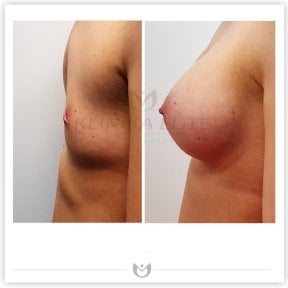
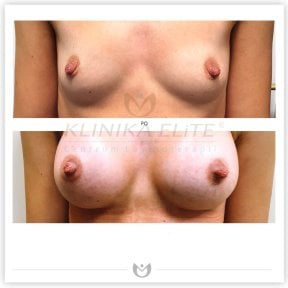
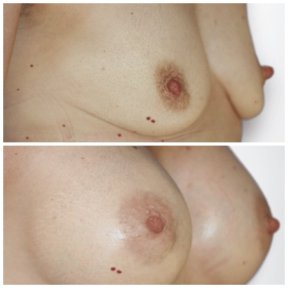
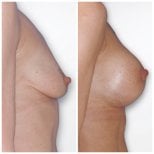
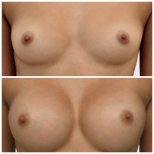
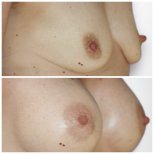
En Pologne, une augmentation mammaire coûte généralement entre $3,200 et $5,500. Le tarif définitif dépend du type d'implant, de sa forme et de la ville choisie, comme Varsovie ou Cracovie. Vous économisez environ 52% par rapport à la France, où le prix moyen est de $9,000. Les forfaits polonais incluent les frais chirurgicaux, l'anesthésie, les implants, l'hospitalisation et le soutien-gorge compressif.
Avis d'expert Bookimed : La Pologne allie qualité certifiée ISO et avantages logistiques. Des établissements comme la KCM Clinic conçoivent des forfaits dédiés aux patients internationaux. Ils incluent souvent le transfert aéroport et l'hébergement pour simplifier votre séjour. Grâce aux honoraires chirurgicaux plus accessibles, vous accédez souvent à des implants anatomiques haut de gamme au prix des modèles standards pratiqué ailleurs.
| Turquie | Pologne | République tchèque | |
| Augmentation mammaire | de $3,809 | de $3,170 | de $3,500 |
| Augmentation mammaire avec transfert de graisse | de $4,410 | de $4,500 | de $5,000 |
| Augmentation mammaire avec prothèse mammaire en silicone | de $3,500 | de $3,500 | de $4,000 |
| Augmentation mammaire avec implants en forme de larme | de $5,138 | de $4,000 | de $3,800 |
| Augmentation mammaire avec implant mammaire eau saline | de $2,800 | de $3,500 | de $3,500 |
Bookimed ne facture pas de frais supplémentaires pour les prix des Augmentation mammaire. Les tarifs sont issus des listes de prix officielles des cliniques. Vous payez directement à la clinique lors de votre arrivée pour votre Augmentation mammaire.
Bookimed s'engage pour votre sécurité. Nous ne travaillons qu'avec des établissements médicaux qui respectent des normes internationales élevées dans Augmentation mammaire et qui possèdent les licences nécessaires pour accueillir des patients internationaux dans le monde entier.
Bookimed offre une assistance experte gratuite. Un coordinateur médical personnel vous accompagne avant, pendant et après votre traitement, en résolvant tous les problèmes. Vous n'êtes jamais seul dans votre parcours de Augmentation mammaire.
Jour 1 : Arrivée
Jour 2 : Pré-opération
Jour 3 : Chirurgie
Jour 4 : Post-opération
Semaine 1 : Rééducation
Semaine 2 à 4 : Rééducation
Semaine 4 à 6 : Rééducation
Semaine 12 : Rééducation
Attention, le cas de chaque patient est unique et les délais de récupération peuvent varier.
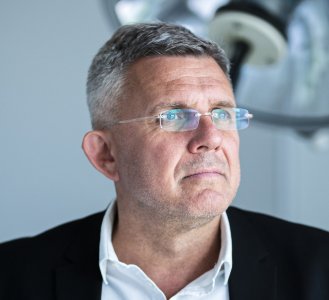
Le Dr Sandelewski a réalisé plus de 1 600 procédures FUE, se spécialisant dans les greffes de cheveux et de barbe.
Breast augmentation in Poland is safe because clinics strictly follow European Union medical standards. Registered facilities use FDA-approved implants within JCI or ISO-certified environments. Polish board-certified surgeons often hold international credentials from boards like EBOPRAS, ensuring surgical precision and low infection rates for global patients.
Bookimed Expert Insight: Poland offers a high-security environment because 86 clinics compete on medical quality rather than just price. Top-tier centers like KCM Clinic serve 2,500 patients annually from the UK and Germany. These high-volume centers often provide specialized package programs that bundle surgery with specific post-operative care items.
Patient Consensus: Patients value the attentive nursing care and clean facilities but emphasize the importance of securing clear post-operative communication. Many recommend confirming your direct surgeon contact or follow-up schedule before traveling home.
Qualified plastic surgeons in Poland must hold the title Specialist in Plastic Surgery (specjalista chirurgii plastycznej) after a 6-year residency. They must be registered with the Supreme Medical Council (NIL) and ideally hold membership in the Polish Society of Plastic, Reconstructive, and Aesthetic Surgery (PTChPRiE).
Bookimed Expert Insight: Patient data shows a clear quality gap between general aesthetic doctors and board-certified specialists. Leading surgeons like Dr. Artur Sandelewski at San-Medical hold multiple postgraduate certifications in aesthetic medicine beyond their surgical degrees. We recommend choosing doctors who maintain active memberships in both national (PTChPRiE) and international societies to ensure they use the latest surgical techniques.
Patient Consensus: Patients value surgeons who listen carefully to their aesthetic goals and provide attentive nursing care during the initial 24-hour hospital stay. Many recommend verifying that an English-speaking coordinator is available to bridge any communication gaps with medical staff.
Polish plastic surgery clinics primarily utilize internationally recognized breast implant brands including Motiva, Mentor, Sebbin, and Polytech. These manufacturers provide high-grade silicone and saline options that meet strict European Union safety standards, ensuring patients receive durable, biocompatible devices with global warranties.
Bookimed Expert Insight: While many clinics like KCM Clinic offer multiple brands, Motiva has become the dominant choice in Poland. Our data shows surgeons prefer its Ergonomix line because it mimics natural breast tissue movement. Interestingly, clinics often bundle the cost of these premium implants into all-inclusive packages, making high-end brands more accessible than in the US.
Patient Consensus: Patients often praise Motiva for its natural feel and low complication rates. Many suggest asking for brand warranty documentation and verifying EU certifications directly with the clinic before surgery.
Full recovery after breast augmentation in Poland typically takes 6 to 8 weeks. Most patients return to desk jobs within 7 days. While initial swelling subsides quickly, final results and complete tissue settling often require 3 to 6 months for most individuals.
Bookimed Expert Insight: KCM Clinic in Poland emphasizes specialized aftercare programs for their 700+ annual international patients. These programs prioritize ISO-certified safety protocols to streamline the healing process. Selecting clinics with high surgical volumes often ensures more predictable recovery timelines due to refined techniques.
Patient Consensus: Many patients describe the first 3 days as the most uncomfortable phase. They emphasize that following compression garment instructions is vital for comfortable movement and reducing tightness.
Most women successfully breastfeed after breast augmentation in Poland. Polish surgeons use advanced dual-plane and submuscular techniques to keep milk ducts and nerves intact. While some may experience reduced supply, research confirms that silicone and saline implants do not contaminate breast milk.
Bookimed Expert Insight: While many focus on placement, the incision site is actually the deciding factor. Polish specialists at clinics like KCM Clinic often recommend inframammary incisions because they completely bypass the glandular tissue. This approach statistically offers the highest probability of maintaining a full milk supply for future pregnancies.
Patient Consensus: Many patients find that waiting at least 1 year after surgery allows tissues to heal fully before nursing. While most breastfeed successfully, some advise keeping formula ready just in case a top-up is needed.
Whether you need to massage your implants in Poland depends on the specific implant type and your surgeon's protocol. Massaging is often omitted for textured or ergonomic implants like Motiva to ensure they adhere correctly, while smooth implants may require it to prevent capsular contracture.
Bookimed Expert Insight: Polish clinics often utilize advanced implants like Motiva, where the trend is away from traditional massaging. Data shows that `no-massage` protocols for submuscular placements frequently result in fewer revisions than older, more aggressive massage techniques. Always verify your specific implant brand before beginning any movement.
Patient Consensus: Patients sharing their experiences in Warsaw and Krakow report that skipping massage for nanotextured implants leads to soft, natural results after 2 years. They emphasize that over-massaging too early can cause implants to shift out of place.
Warsaw, Wroclaw, and Jelenia Gora are the primary hubs for breast augmentation in Poland. These cities host facilities with ISO 9001 certifications and clinics collaborating with international healthcare institutions to maintain safety. Patients choose these locations for advanced silicone or saline implant technology and specialized techniques.
Bookimed Expert Insight: While Warsaw is the primary medical gateway, Jelenia Gora actually attracts higher volumes of international patients specifically for plastic surgery. KCM Clinic in Jelenia Gora is located 90 km from Wroclaw but handles 700+ foreign patients yearly. This suggests that specialized destination clinics often offer more robust international support structures than general clinics in the capital.
Patient Consensus: Patients recommend choosing a surgeon based on their specific portfolio rather than the city alone. Most emphasize confirming aftercare protocols and revision policies in writing, as these services vary between different providers.